01 / The problemThe distance between strategy and execution
A brand is not a prompt.
Content work depends on more than a good instruction. It needs a shared understanding of the brand, its audience, its sources and what has actually been approved.
Pulse Growth Engine brings those pieces into an application: brand intake, evidence review, strategy, visual direction, content packages and a review queue. The case focuses on how that workflow is made understandable—not on claims of unlimited automation.
Project
Pulse Growth Engine
Context
Internal founder-led product
Case focus
Workflow, interface, review design
Status
Active build / Mixed-date evidence
02 / Brand identity
The product's own identity.
The current application combines a dark workspace, a blue-to-violet accent system and Geist typography. This product identity is distinct from Pulse Branding and from Pulse Instinct.
Current interface symbol / not a custom logo master
Pulse Growth Engine
Working interface identity Custom logo master still pending
Bring source material into view before treating it as a brand fact.
02 / Decide
Strategy
Make positioning, audience and voice available as reviewable working material.
03 / Create
Content kits
Carry the approved direction into prompts and platform-specific packages.
04 / Review
A visible gate
Keep quality state and approval separate from the act of generation.
A case-study map of the source application’s workflow. It is not a live execution monitor.
04 / The current entry pointInstalled local app / September 2026
The product has its own voice.
This is the real entry page served by the installed local application. Its headline is product marketing copy, not a verified promise that every integration or publishing route runs autonomously.
The browser requires sign-in for the internal workspace. No account was created and no authentication was bypassed to make this case.
Pulse Growth Engine / Local application entry
Live local capture / 7 September 2026
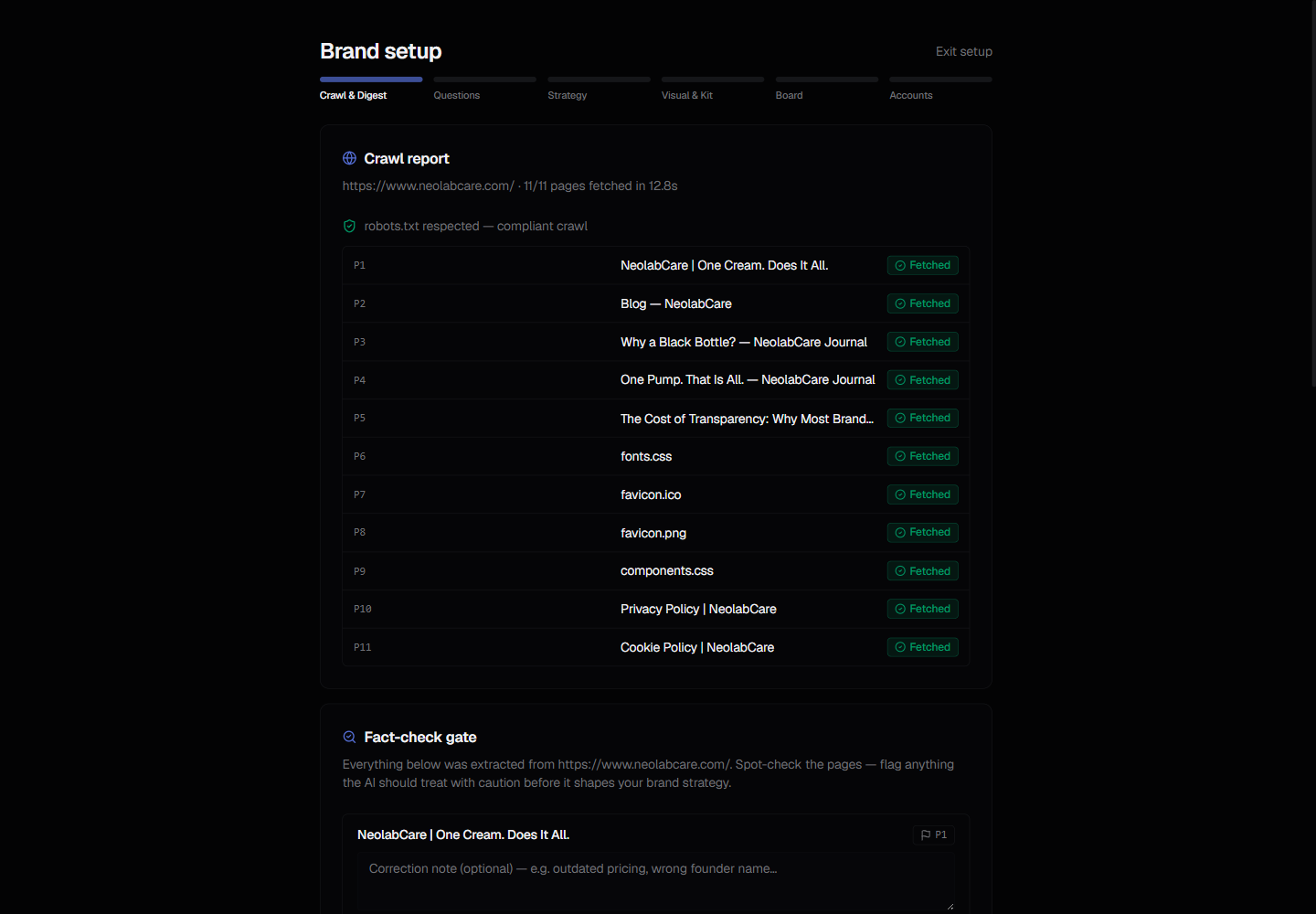
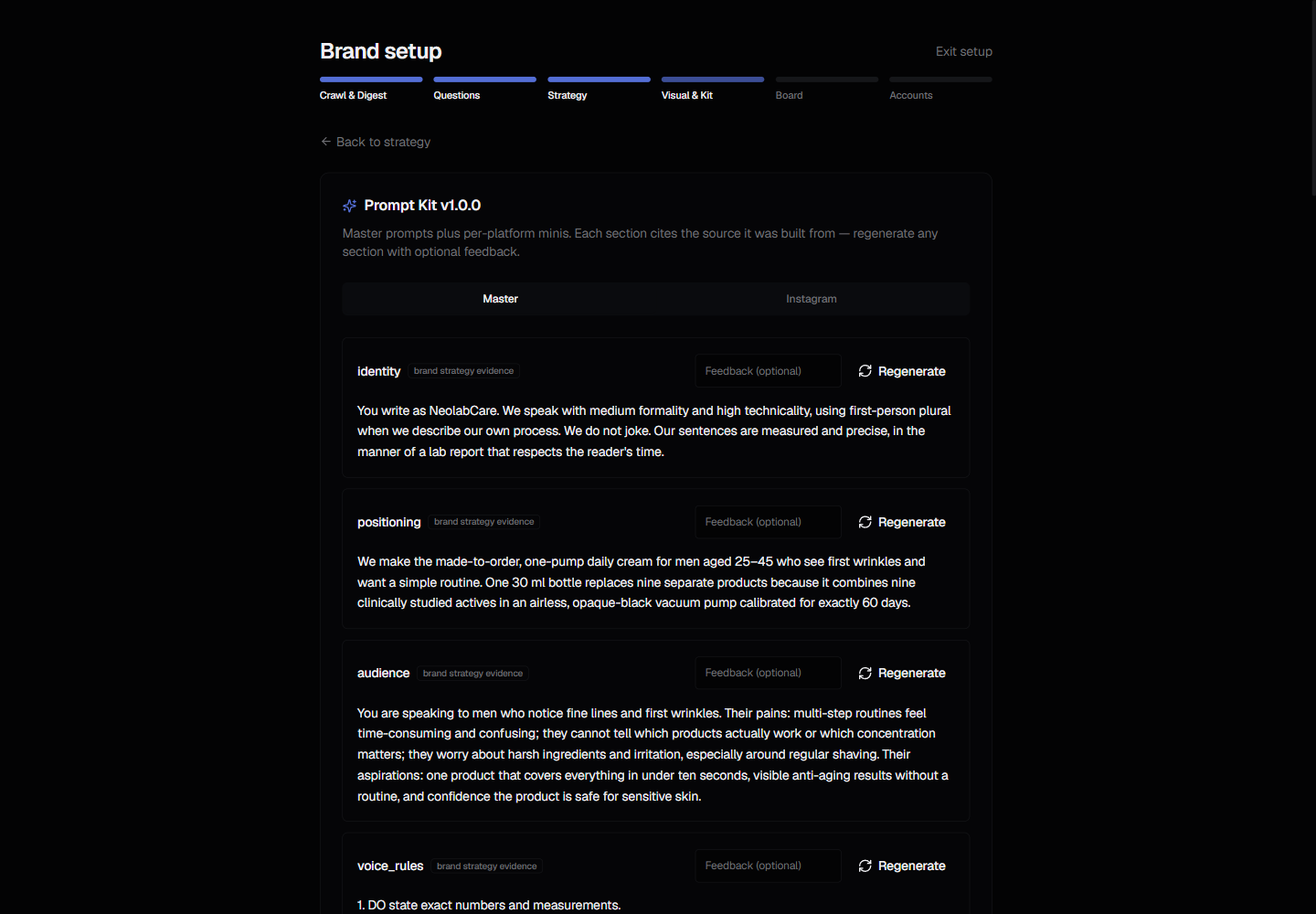
05 / Inside the applicationHistorical internal review / 26 August 2026
Show the source. Show the decision.
These original internal captures come from a documented review using disposable test data and a real provider. They illustrate the interface at that date. The recorded run stopped at a failed quality gate; it did not prove a completed publishing journey.
Source review / Dated internal evidence, not a fresh live capture.
Prompt kit / Example source-derived content is shown as historical test material, not approved client claims.
Board review / The accompanying receipt records that a failed artifact blocked real-provider completion. Displayed cost estimates are historical, not current pricing.
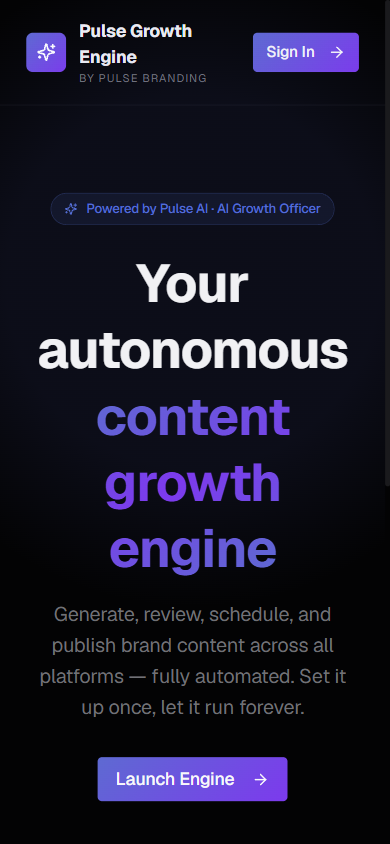
06 / Mobile entryActual responsive entry screen
A smaller doorway. The same product.
The application’s entry page was also captured at mobile width. Internal mobile-dashboard behavior is not represented here because the current browser session is not signed in.
Local application / Mobile entry390 × 844 device viewport. A website capture in a phone frame, not a released native mobile application.
Automation earns trust when people can see what it used, what it produced and what still needs a decision.
07 / The design principle
08 / Work on recordInternal product / Not a launch announcement
A system in progress. Its limits, visible.
What is established
Current local entry-screen design and responsive rendering; source-defined palette and typography; dated internal interface evidence for source review, prompt kits and quality review. The diagram and editorial compositions are new case-study presentation devices.
What remains unverified
A fresh authenticated workflow, current integration connections, publishing delivery, installed build revision, performance metrics and commercial outcomes. None are implied by these screenshots. This internal case needs confidentiality and credit review before publication.